Sunrocks vs Moonrocks — Which One Is Actually Stronger?
Sunrocks and moonrocks look the same on the outside. But the ingredients, the quality, and the potency tell a completely different story. Here's the real difference.
You've probably seen both on a menu and wondered if the price difference is worth it. Or maybe someone handed you one and you had no idea what made it different from the other. Either way — here's the honest breakdown, no fluff.
They Start the Same Way
Both products are built on the same idea. Take a cannabis bud, coat it in oil, dust it with kief. That's the base formula for both. So on the surface they look similar, and honestly some menus don't even explain the difference properly.
But the ingredients tell a completely different story.
The Bud Inside Is Not the Same
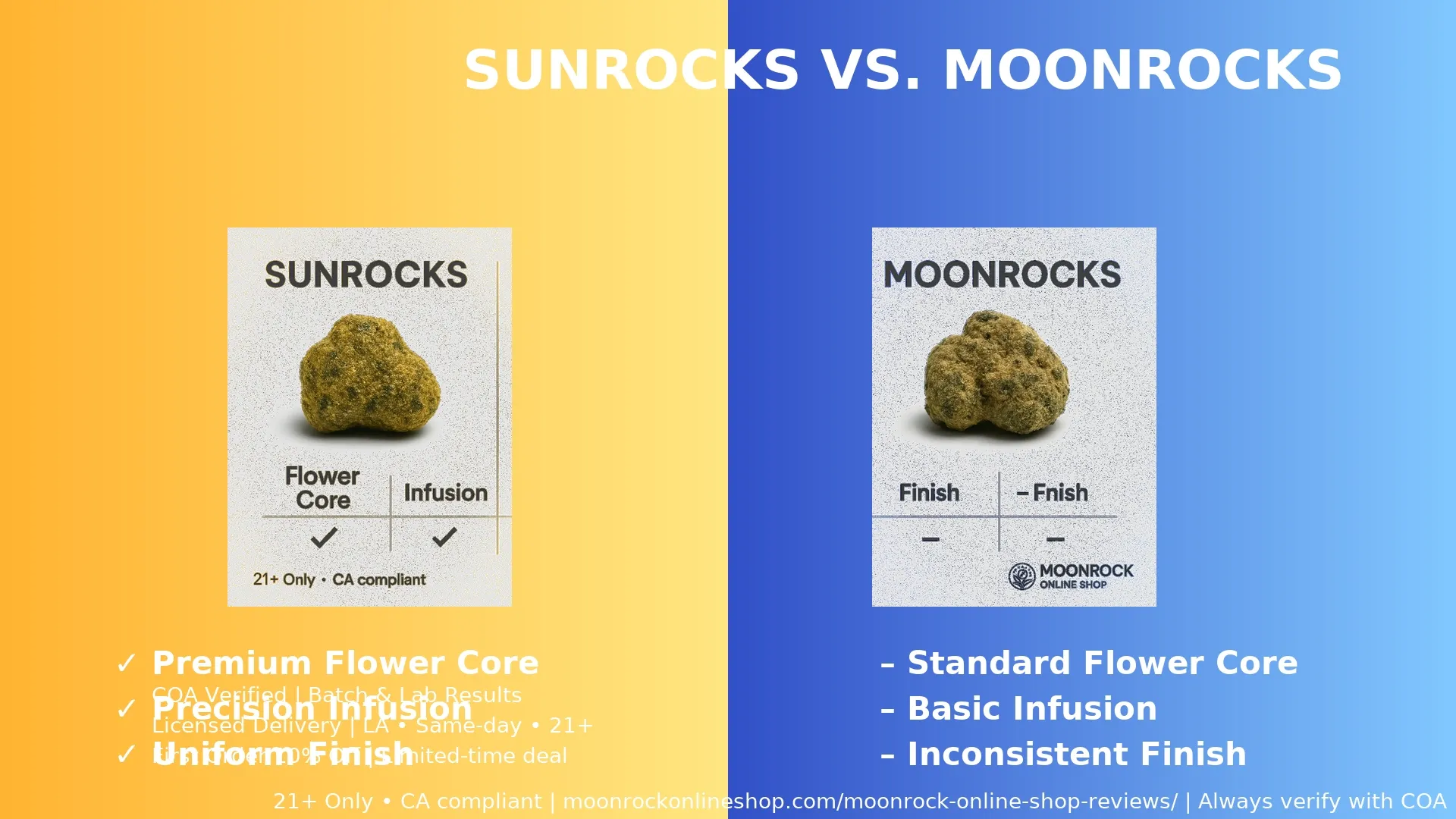
This is the biggest thing most people don't know. Moonrocks can be made with any grade of flower — and a lot of brands take advantage of that. The thick kief coating hides whatever's inside. You won't know until you break it open.
Sunrocks don't work that way. The flower has to be top-shelf, no exceptions. That's not a marketing line — it's baked into what makes a sunrock a sunrock. Low grade flower disqualifies the product entirely.
If you want to know more about what goes into building a sunrock from scratch, this breakdown covers the full process.
The Oil Is Where It Gets Interesting
Moonrocks use hash oil or distillate. It doesn't have to match the strain of the bud — and most of the time it doesn't. That's fine for the price point, but it means the flavor can be all over the place.
Sunrocks use a cleaner, higher-grade concentrate. And it always has to come from the same strain as the bud. That single rule changes everything about the experience. You're getting one strain amplified — not a random combination of mismatched parts hitting you at the same time.
What They Actually Look Like
Moonrocks are easy to spot. Heavy kief coating, totally opaque, looks like a gray or green ball. You can't see the bud inside at all.
Sunrocks look different. The kief layer is lighter, thin enough that you can still see the bud and the oil underneath. That amber glow showing through is actually a quality indicator — real sunrocks should never be fully covered.
The THC Gap Is Real
| Moonrocks | Sunrocks | |
|---|---|---|
| Average THC | ~50% | 70–80% |
| Flower quality | Any grade | Top-shelf only |
| Oil source | Any strain | Same strain as bud |
| Kief coating | Thick, opaque | Light, visible |
That 20–30% THC gap isn't small. Both products hit way harder than regular flower — but sunrocks are in a different league. One small piece can floor even experienced smokers who underestimate them.
So Which One Should You Get
Moonrocks are the move if you want something stronger than flower without going completely overboard. More accessible, more budget-friendly, widely available.
Sunrocks are for people who already know their tolerance and want the most potent, strain-specific experience possible. There's no casual session with sunrocks. You plan for it.
Both are available for same-day delivery in Los Angeles. Shop moonrocks here or grab sunrocks here — whichever fits your session.
Conclusion
Moonrocks and sunrocks share the same idea but not the same standards. The flower, the oil, the kief — every component in a sunrock is a grade higher. That's what you're paying for, and for the right person, it's completely worth it.